

If you handle Controlled Unclassified Information (CUI), CMMC 2.0 Level 2 readiness is not a paperwork exercise.
You need working controls. You need documented evidence. You need a System Security Plan (SSP) that matches your real environment. You need a current Supplier Performance Risk System (SPRS) score and a clear path to assessment.
You can reach a defensible readiness position in 90 days. That does not mean every contractor completes full remediation in 90 days. Complex environments take longer. It means you establish scope, identify every gap, implement priority controls, build your evidence process, and create a credible plan for final assessment readiness.
This roadmap shows how to do it.
What CMMC Level 2 Requires
CMMC Level 2 aligns with the 110 security requirements in NIST SP 800-171 Revision 2. Those requirements span 14 control families, including:
- Access Control
- Awareness and Training
- Audit and Accountability
- Configuration Management
- Identification and Authentication
- Incident Response
- Risk Assessment
- System and Communications Protection
- System and Information Integrity
The DoD CMMC alignment guidance confirms that CMMC Level 2 uses NIST SP 800-171 Rev. 2 as its core control set.
Your readiness package must cover more than policies. You need:
- A defined CUI boundary
- A complete asset and user inventory
- Implemented technical controls
- Documented policies and procedures
- A current SSP
- A POA&M for eligible remaining gaps
- Evidence mapped to assessment objectives
- A defensible SPRS score
- Controls operating consistently over time
NIST has moved to Rev. 3, but DoD assessment alignment remains tied to Rev. 2 until formal rulemaking changes the assessment standard. Track Rev. 3. Build for Rev. 2 today.
Why Generic Compliance Templates Fail
Most DoD subcontractors do not fail because they lack a policy document.
They fail because the document does not match the environment.
The policy says administrators use MFA. The tenant has exceptions.
The SSP says logs are retained. No one can produce the retention configuration.
The access control procedure requires quarterly reviews. No one has completed or recorded one.
The incident response plan names a process nobody has tested.
Templates create this problem. They describe an ideal system instead of documenting your actual one.
We do not build compliance around generic templates. We engineer the controls into your existing stack, then document the system as it operates. That approach gives you stronger security and evidence your assessor can verify.
The 90-Day CMMC 2.0 Level 2 Readiness Roadmap
Phase 1: Days 1–30 : Define Scope and Establish Your Baseline

Your first 30 days determine whether the rest of the project stays controlled or becomes another compliance scramble.
Identify where CUI enters, moves, lives, and leaves your organization.
Document:
- Applications that process CUI
- Cloud tenants and storage locations
- Endpoints and servers
- Network segments
- Remote access paths
- Privileged accounts
- Employees, contractors, and vendors with CUI access
- Backup and recovery locations
- Physical locations where CUI is handled
Create a clear boundary around the in-scope environment. Do not automatically place your entire company inside the CMMC scope. Use segmentation and access restrictions to reduce unnecessary exposure.
Your milestone by Day 10: a documented CUI data flow map, asset inventory, user inventory, and draft system boundary.
Run an evidence-based gap assessment against all 110 NIST SP 800-171 Rev. 2 requirements.
Classify each requirement as:
- Fully implemented
- Partially implemented
- Not implemented
- Not applicable, with documented justification
Do not mark a control complete because a tool has the feature. Verify that the feature is configured, enforced, monitored, and documented.
Prioritize high-impact gaps first:
- MFA for privileged, remote, and general users
- Least-privilege access
- Centralized audit logging
- Secure configuration baselines
- Endpoint protection
- Vulnerability management
- Incident response
- Media protection
- Security awareness training
- CUI encryption and data handling
Score your current posture using the DoD Assessment Methodology. The scoring model assigns different weights to requirements, and unresolved controls can produce a significant negative score.
Record:
- Your current SPRS score
- Every unmet requirement
- The reason for each gap
- The owner responsible for remediation
- The evidence needed to close the gap
- The expected completion date
Your milestone by Day 30: a baseline SPRS score, prioritized remediation backlog, and approved CUI scope.
That baseline tells you what needs engineering. It also prevents vague claims about readiness.
Phase 2: Days 31–60 : Engineer Controls and Build Documentation

The second phase turns your gap report into an operating security environment.
Days 31–45: Fix identity, access, and infrastructure controls
Start with the controls that affect every other part of your environment.
Implement:
- MFA across all required user categories
- Role-based access control
- Privileged access restrictions
- Account provisioning and termination workflows
- Conditional access policies
- Device compliance enforcement
- Encryption for CUI at rest and in transit
- Secure endpoint configurations
- Patch and vulnerability management
- Centralized logging and time synchronization
- Network segmentation around CUI systems
For Microsoft environments, this often includes hardening Entra ID, Microsoft Purview, Defender, and Sentinel in a suitable government cloud architecture. For other environments, it may require AWS GovCloud, Azure Government, private infrastructure, or a dedicated CUI enclave.
The right architecture depends on your contracts, data flows, users, and existing technology. There is no universal deployment pattern.
Days 46–52: Implement operational processes
Technical controls fail when no one owns the recurring work.
Assign owners and schedules for:
- Access reviews
- Log review
- Vulnerability scans
- Configuration reviews
- Incident response exercises
- Security training
- Backup testing
- Media sanitization
- Change approvals
- Risk reviews
- Vendor access reviews
Automate evidence collection where possible. Use workflow automation to route approvals, record timestamps, assign owners, and preserve audit trails.
Manual spreadsheets are not a security system. They are temporary tracking tools.
Days 53–60: Write the SSP and POA&M from the environment
Your SSP must explain how your organization meets each applicable requirement.
Each control narrative should identify:
- The system or service involved
- The configuration that enforces the control
- The responsible role
- The operating procedure
- The evidence location
- Any inherited responsibility from a cloud or service provider
Build the SSP as implementation progresses. Do not wait until Day 89.
Create a POA&M only for eligible remaining gaps. Each item needs:
- A specific control reference
- A defined remediation action
- An accountable owner
- A measurable milestone
- A target completion date
- Supporting evidence
Your milestone by Day 60: implemented priority controls, assigned operational ownership, a working evidence process, and an SSP that reflects reality.
Phase 3: Days 61–90 : Operate, Validate, and Prepare for Assessment
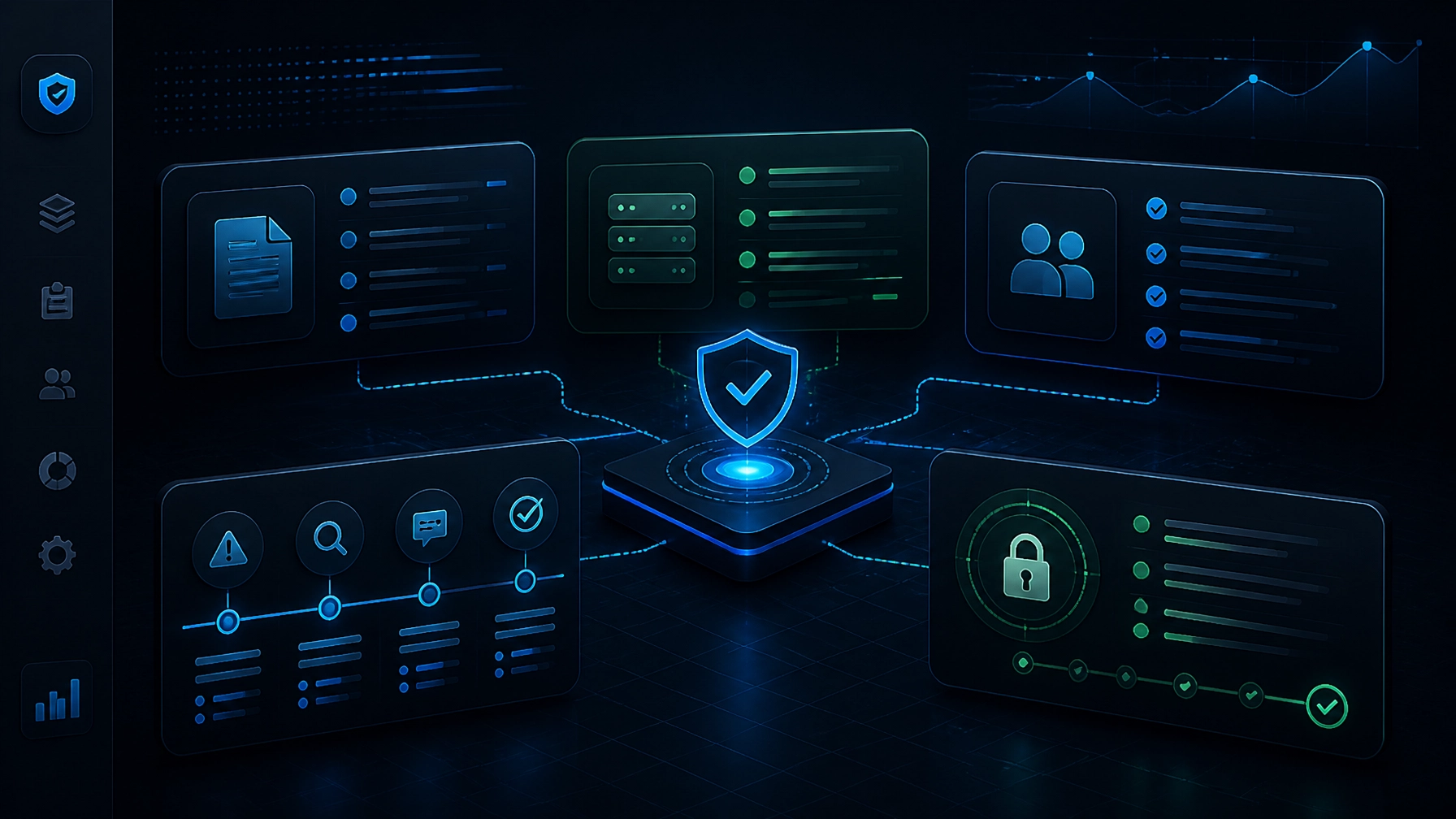
The final phase proves that your controls operate consistently.
Days 61–75: Run the environment in a controlled state
Operate the controls without undocumented exceptions.
Collect evidence such as:
- Authentication and access logs
- MFA enforcement reports
- Account review records
- Configuration baselines
- Change tickets
- Vulnerability scan results
- Endpoint protection reports
- Security training records
- Incident response test results
- Backup and recovery test records
- Vendor access reviews
- Log retention settings
Assessors look for repeatable operation. A screenshot from the day before an assessment does not prove a mature process.
The 90-day operating expectation makes this phase critical. Start collecting evidence immediately and preserve it in a controlled repository.
Days 76–82: Run an internal assessment
Test your environment against the NIST SP 800-171A assessment objectives.
Ask direct questions:
- Can you show the control working?
- Can the control owner explain the process?
- Does the SSP describe the current configuration?
- Does the evidence show recurring operation?
- Are exceptions approved and tracked?
- Does the control apply to every in-scope system and user?
Treat every unanswered question as a finding.
Days 83–90: Finalize your readiness package
By Day 90, complete:
- Final CUI boundary documentation
- Updated asset and user inventories
- Updated SSP
- Updated POA&M
- Evidence index
- Internal assessment findings
- Corrective action plan
- Updated SPRS score
- Assessment preparation schedule
A fully implemented environment targets the complete 110-point posture. Conditional status has historically involved a minimum score threshold and eligible POA&M items, but do not build your strategy around passing with open gaps. Close every control you can before assessment.
Autom8ion Lab is not a CMMC Registered Practitioner Organization or C3PAO. We engineer NIST 800-171 controls, build the evidence package, and work alongside qualified assessment partners when an independent assessment is required.
What the 2026 CMMC Reform Review Means for You
The 2026 reform review has paused pending and future milestones in the CMMC phased implementation plan. That review affects rollout and enforcement timing.
It does not eliminate your existing cybersecurity obligations.
DFARS requirements remain relevant. CUI protection remains mandatory. NIST SP 800-171 alignment remains the foundation for Level 2 readiness. Prime contractors still need confidence that subcontractors can protect CUI and support contract requirements.
Waiting for a final policy announcement is a poor strategy. A ready environment gives you options. You can respond to a prime contractor, prepare for a C3PAO assessment, improve your SPRS position, and adapt faster when DoD finalizes its next implementation path.
Custom SDVOSB CMMC Compliance Engineering
Your business logic is not generic. Your contract requirements, users, systems, and CUI workflows are specific.
That is why SDVOSB CMMC compliance engineering must involve more than a checklist.
Autom8ion Lab builds custom systems around your existing technology stack. We implement access controls, cloud configurations, logging, encryption, workflows, SSPs, POA&Ms, and evidence collection as one connected program.
We do not hand you a binder and leave implementation to your internal team.
We build the controls.
We document the controls.
We help you operate the controls.
Then we prepare your environment for independent assessment.
Explore our cybersecurity and compliance services or review our federal capability statement.
Start Your 90-Day Readiness Plan
Your first step is not buying another compliance platform.
Your first step is defining your CUI boundary and measuring your actual control posture.
If you need NIST 800-171 compliance for defense contractors, we can scope the environment, identify the gaps, and build a remediation plan around your systems.
Schedule a consultation with Autom8ion Lab. Let’s build a CMMC Level 2 readiness plan that works in your environment.
Keep reading
NIST 800-171 Compliance for Defense Contractors: The 7 Controls Everyone Fails First
You can have policies, security software, and a completed compliance spreadsheet and still fail a NIST 800-171 assessment. The reason is simple. Assessors do not grade your intentions. They grade whether your controls work across the systems that process.
8 min readAI-Driven Evidence: Automating Your CMMC Audit Without the "Hallucinations"
Generic AI hallucinates compliance documentation — and that's a False Claims Act problem. Here is the human-in-the-loop blueprint we use to take federal and DIB contractors from manual evidence chasing to a continuous, NIST 800-171-bound CMMC audit engine.
10 min readFrom Zero to CMMC Ready: Can AI Really Shrink Your 12-Month Timeline to 30 Days?
Defense contractors don't have 12 months. We compress CMMC Level 2 readiness into 30 days with secure AI enclaves, FIPS-validated infrastructure-as-code, and AI-drafted SSPs bound to live configs. Federal-first. SDVOSB Pending.
11 min readReady to Transform Your Business with AI Automation?
Let's discuss how custom automation solutions can deliver measurable results for your specific business needs.
Schedule a Consultation